
The Ultimate Guide to Commercial Bridge Loans

Commercial bridge loans serve as a critical short-term financing mechanism in the real estate capital stack. Traditionally defined as a temporary funding solution, these loans “bridge” the gap between an immediate capital need: such as an acquisition or a pressing maturity: and a long-term financing event or the sale of an asset. In the 2026 economic environment, where traditional banking institutions have significantly tightened credit standards, bridge capital has transitioned from a niche tool to a primary strategy for institutional and private investors alike.
Historically, bridge lending emerged as a response to the inherent delays of conventional mortgage processing. While a standard commercial mortgage may require 60 to 90 days for full underwriting and committee approval, a bridge loan can often be structured and funded within 14 to 30 days. This speed is necessitated by the rapid pace of modern real estate transactions and the ongoing “maturity wall” of debt established in previous low-rate cycles.
Define the core mechanics of bridge financing
At its essence, a commercial bridge loan is a short-term, asset-based lien characterized by its flexibility and higher cost relative to permanent debt. These loans are typically non-amortizing, meaning the borrower makes interest-only payments throughout the term, with the full principal balance due upon maturity. This structure preserves cash flow for the borrower during the transitional phase of the property’s lifecycle.
Lenders evaluate bridge opportunities based primarily on the collateral’s current and future value rather than historical performance. This focus allows for the financing of properties that may not currently meet the strict Debt Service Coverage Ratio (DSCR) requirements of a traditional bank but possess a clear path toward stabilization.

Identify primary use cases for short-term capital
The application of bridge capital is diverse, catering to specific phases of investment and portfolio management. The following scenarios represent the most common use cases in the 2026 market:
- Acquisitions: In competitive markets, the ability to close quickly is often more valuable than the lowest possible interest rate. Investors utilize bridge loans to secure properties before more traditional financing can be arranged.
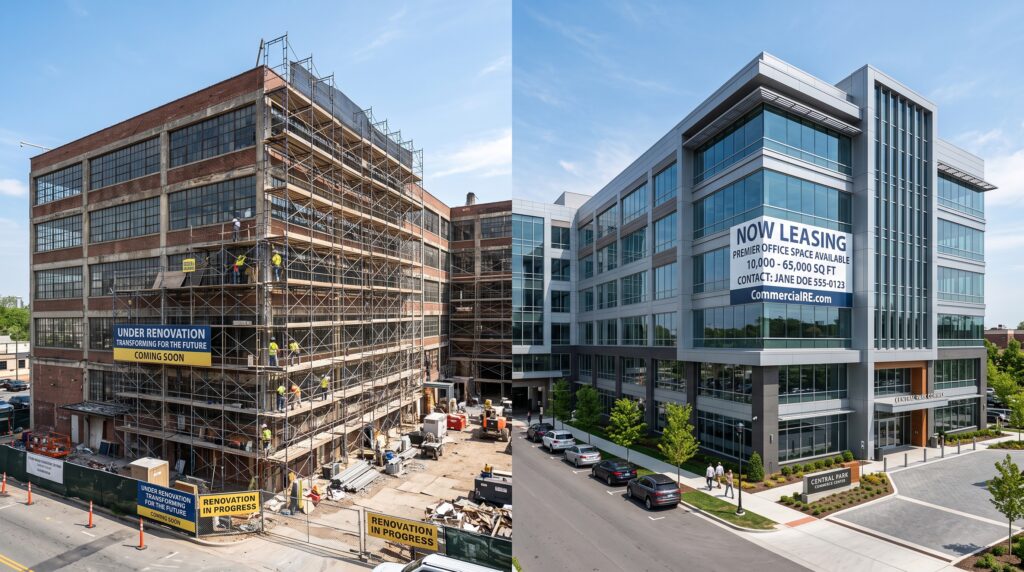
- Value-Add Projects: Properties requiring significant renovation or repositioning often do not qualify for permanent financing. A rehab loan provides the capital for both the purchase and the improvements, with the expectation that the property’s value will increase upon completion.
- Repositioning and Lease-Up: For commercial assets with high vacancy rates, bridge loans provide the “runway” necessary to secure new tenants and improve Net Operating Income (NOI) to a level that meets permanent lending criteria.
- Refinance Gaps: As existing debt matures, some investors find that the current value of their asset or the new lending environment creates a shortfall. A bridge loan can satisfy the maturing debt while giving the owner time to improve the asset or wait for more favorable market conditions.
Analyze the 2026 market landscape
The 2026 commercial lending market is characterized by a “flight to quality” and the professionalization of the private lending sector. With approximately $2 trillion in commercial debt maturing through the end of the year, demand for bridge structures remains at historic highs.

Current rate environment and pricing
Pricing for bridge loans is predominantly floating, typically indexed to the Secured Overnight Financing Rate (SOFR). In 2026, all-in interest rates generally range from 8% to 12%, depending on the risk profile of the asset and the experience of the sponsor.
- Institutional Bridge: Typically priced at SOFR + 300 to 450 basis points. These loans are often reserved for core assets and highly experienced developers.
- Debt Funds and Private Lenders: These sources often offer more flexibility in exchange for higher spreads, commonly ranging from SOFR + 450 to 650 basis points.
- Asset-Specific Spreads: Multifamily and industrial assets continue to command the tightest spreads due to strong fundamentals. Conversely, office and retail assets face wider spreads and more conservative leverage.
Lender categories and appetite
Lender types in the bridge space include debt funds, insurance companies, private money firms, and specialized non-bank lenders. While traditional banks have largely moved to the sidelines for transitional assets, private capital has filled the void, utilizing sophisticated data-driven risk assessments to offer competitive terms to qualified borrowers.
Evaluate key terms and structural components
Understanding the specific terms of a bridge loan is essential for accurate financial modeling. While every deal is unique, several standard benchmarks exist in the 2026 landscape:
- Loan-to-Value (LTV) and Loan-to-Cost (LTC): Most bridge lenders cap LTV at 65% to 75% of the “as-is” value. For renovation projects, LTC (Loan-to-Cost) may reach up to 80% for experienced sponsors, covering a portion of the purchase price and 100% of the renovation budget.
- Loan Duration: Terms typically range from 12 to 24 months, though 36-month terms are available for complex business plans. Many loans include one or two 6-month extension options, often contingent on meeting certain performance milestones or paying an extension fee.
- Recourse: While many bridge loans are structured as non-recourse with standard “bad boy” carve-outs, some lenders may require partial or full recourse depending on the leverage level and the strength of the asset.
- Interest Reserves: Since transitional properties may not generate sufficient cash flow initially, lenders often require an interest reserve: a portion of the loan proceeds set aside to cover monthly interest payments during the early stages of the project.

Navigate underwriting and eligibility requirements
Underwriting for bridge loans is more holistic than for permanent debt, yet it remains rigorous. Lenders prioritize three primary pillars:
Review sponsor experience
The “track record” of the borrower is paramount. Lenders seek evidence of successfully executed business plans similar to the one proposed. This includes prior experience with the specific property type and the local market.
Validate the business plan
A detailed, realistic business plan is required. This should outline the intended improvements, the projected timeline for stabilization, and the specific market drivers that will support the target rents or sale price.
Confirm liquidity and net worth
Despite being asset-based, lenders require sponsors to maintain sufficient “skin in the game.” Standard requirements often include a net worth at least equal to the loan amount and post-closing liquidity of 5% to 10% of the total loan.
Prioritize a viable exit strategy
The most critical component of a bridge loan application is the exit strategy. A bridge loan is, by definition, temporary; therefore, the lender must have absolute confidence in how the loan will be repaid at maturity.
Common exit strategies include:
- Refinancing into Permanent Debt: Once the property is stabilized (reaching 90% occupancy, for example), the borrower can transition to a lower-cost, long-term commercial mortgage.
- Sale of the Asset: For fix-and-flip or opportunistic developers, the sale of the improved property serves as the liquidity event to retire the bridge debt.
- Cash-Out Refinance: In cases where significant value has been added, a new loan can pay off the bridge debt while allowing the investor to extract equity for future acquisitions.
Failure to demonstrate a clear and achievable exit strategy is the most frequent cause of loan denial in the bridge space.

Leverage national private money broker expertise
Navigating the complexities of the 2026 bridge lending market requires a specialized approach. FBS Commercial Capital operates as a certified national private money broker, providing investors with a strategic gateway to a vast network of institutional and private capital sources.
Rather than acting as a direct lender with a limited set of products, FBS Commercial Capital functions as an expert intermediary. This role involves analyzing the unique requirements of a deal, structuring the capital stack for maximum efficiency, and placing the loan with the specific lender whose current appetite and terms best align with the borrower’s vision. By leveraging deep industry relationships and a sophisticated understanding of specialized loan types, FBS Commercial Capital ensures that real estate investors can secure the bridge capital necessary to scale their portfolios in a challenging economic environment.
Effective capital placement involves more than merely finding a rate; it requires aligning the loan structure with the operational realities of the asset. From SBA 504 loans for owner-occupied properties to complex mezzanine financing for large-scale developments, a broker’s expertise is the differentiating factor in successfully closing a deal.
Virginia |


