
Why Smart Women Are Quietly Learning How Money Moves in Real Estate

The landscape of real estate investment has historically been dominated by institutional capital, characterized by high-volume transactions and sophisticated debt structures. Recently, a demographic shift has occurred as more female investors transition from traditional residential strategies toward institutional-level commercial financing. This movement is defined not by loud market participation, but by a quiet, calculated mastery of how capital flows through private money markets. By adopting the mechanics once reserved for family offices and hedge funds, these investors are restructuring their portfolios for scalability and long-term stability.
Understanding the movement of money requires a foundational grasp of the distinction between direct lending and brokerage. FBS Commercial Capital serves as a certified national private money broker, positioning itself as the intermediary that structures complex deals and facilitates access to institutional-grade capital. This role is critical in a market where direct lenders often have rigid, one-size-fits-all criteria. A broker, conversely, evaluates the specific needs of a project and matches it with the most advantageous financing vehicle.
Analyze Institutional-Level Investment Strategies

To move money effectively, one must first categorize the risk-return profile of an asset. Institutional investors typically divide real estate acquisitions into three distinct tiers: Core, Value-Add, and Opportunistic.
Define Core Assets
Core assets represent the most conservative tier of real estate investment. These are high-quality, stabilized properties in primary markets with high occupancy rates and creditworthy tenants. The strategy here is wealth preservation and steady income rather than aggressive growth. While the returns are lower, the risk profile is minimal, making them the “anchor” of a sophisticated portfolio.
Execute Value-Add Strategies
Value-add investments are properties that are currently underperforming due to operational inefficiencies, deferred maintenance, or dated aesthetics. The strategy involves deploying capital to improve the asset, thereby increasing the Net Operating Income (NOI) and the overall property value. This is where strategic financing, such as rehab loans, becomes an essential tool for forced appreciation.
Evaluate Opportunistic Ventures
The highest risk tier, opportunistic investments, often involves ground-up development, major repositioning, or distressed asset recovery. These projects require a high level of expertise and significant capital. Financing for these ventures often utilizes bridge loans or mezzanine financing to cover the gap between acquisition and stabilization.
Master the Mechanics of Debt

Strategic real estate investment is less about property management and more about the management of debt. High-net-worth female investors are increasingly prioritizing the study of debt coverage and leverage ratios to ensure their portfolios can withstand market volatility.
Leverage Debt Service Coverage Ratio (DSCR) Loans
The Debt Service Coverage Ratio (DSCR) is a critical metric used by private money brokers to evaluate a property’s ability to cover its own debt. Unlike conventional mortgages that rely on personal income and debt-to-income (DTI) ratios, DSCR loans focus exclusively on the rental income generated by the asset. A ratio of 1.2x or higher typically indicates that the property produces 20% more income than the monthly mortgage payment, signaling a healthy, self-sustaining investment.
Utilize Bridge Financing for Speed
In a competitive market, the ability to close a deal quickly is often more valuable than a slightly lower interest rate. Bridge loans provide short-term capital: usually 6 to 36 months: to “bridge” the gap until long-term financing can be secured or the property is sold. This is a common tactic for acquiring undervalued properties before they reach the open market.
Compare Purchase and Refinance Options
The movement of capital often involves extracting equity from existing assets to fund new acquisitions. A cash-out refinance allows an investor to leverage the increased value of a stabilized property, providing the liquidity necessary for the next phase of growth without liquidating the original asset. This “recycle and reinvest” cycle is a hallmark of institutional portfolio building.
Evaluate the Benefits of Broker Facilitation
The decision to work with a certified national private money broker is a strategic one. While a direct lender is limited to its own balance sheet and specific risk appetite, a broker provides a broader view of the lending landscape.
Review Eligibility and Deal Structure
A broker reviews the specific metrics of a deal: Loan-to-Value (LTV), Loan-to-Cost (LTC), and the borrower’s track record: to determine the most appropriate funding source. This objective analysis prevents the delays often associated with direct lenders who may decline a deal late in the process due to internal capital constraints.
Access Specialized Financing Programs
Many sophisticated financing options are not available to the general public. Programs such as non-recourse loans, where the lender’s only recourse in the event of default is the collateral itself, or SBA 504 loans for owner-occupied commercial real estate, require specialized knowledge to navigate. A broker acts as the guide through these complex regulatory and underwriting requirements.
Diversify Through Property Types
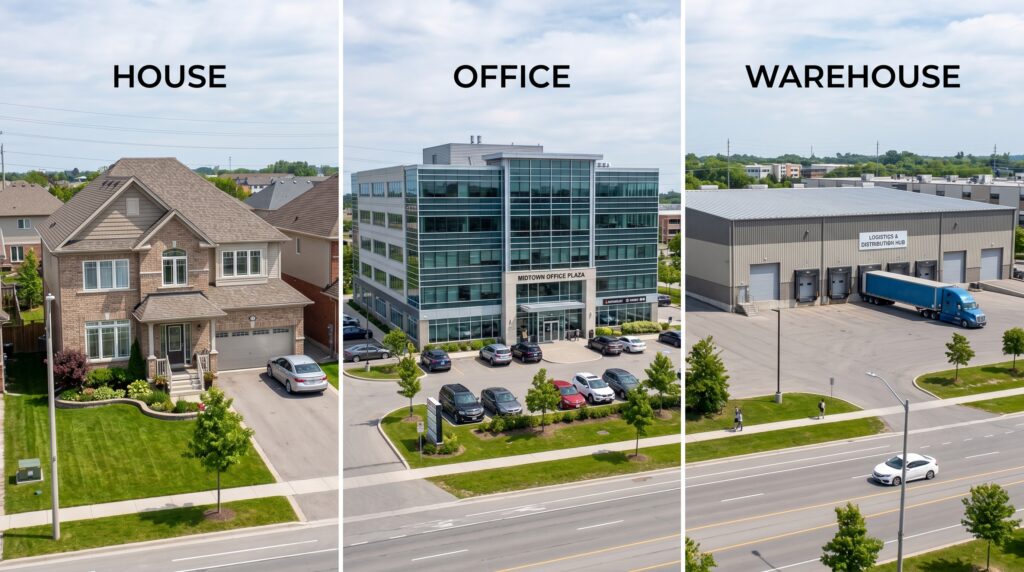
Institutional intelligence dictates that diversification across property types reduces systemic risk. Smart investors are moving beyond single-family rentals into sectors that offer higher yields and greater stability.
- Multi-Family (5+ Units): Offers economies of scale and lower vacancy risk compared to single-unit properties.
- Mixed-Use Properties: Combine residential and commercial tenants, providing multiple revenue streams within a single asset.
- Self-Storage and Warehouse: These “industrial-lite” assets have shown remarkable resilience during economic downturns due to lower overhead and consistent demand.
- Office and Retail: While requiring more intensive management, these properties often feature long-term triple-net (NNN) leases where the tenant covers taxes, insurance, and maintenance.
The transition from a casual investor to a sophisticated real estate strategist requires a commitment to financial literacy and a shift in perspective. By focusing on the mechanics of private money, the nuances of debt coverage, and the advantages of broker-led deal structuring, investors can move with the same precision and confidence as institutional giants. The quiet movement of money is not about the visibility of the transaction, but the strength and sustainability of the underlying structure.
Virginia | FBS Commercial Capital | fbsllc.net |


